DNR courtesy boat inspections set for July Fourth weekend

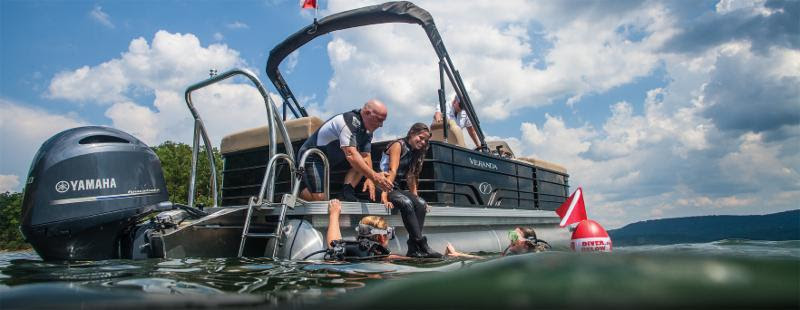
In an effort to keep state waterways safe during the upcoming July Fourth holiday weekend and beyond, the S.C. Department of Natural Resources (DNR) Law Enforcement Division will again be conducting courtesy safety inspections at some public boat landings. The July Fourth holiday weekend, July 2-4, is one of the busiest weekends of the year on state waters.

DNR courtesy boat inspections set for July Fourth weekend

DNR boating safety and enforcement officers will perform a quick, but thorough inspection for items such as required safety equipment and proper boat and motor registration. Those who are not in compliance with safety regulations or registration requirements will not be ticketed during the complimentary inspections. Instead, they will be given an opportunity to correct the problem before they launch their boat. DNR officers will also be available to answer questions and give boaters tips on how to stay safe on the water.

To report boating violations such as reckless operation or an intoxicated boat operator, call the DNR toll-free, 24-hour hotline at 1-800-922-5431. For a copy of South Carolina’s boating regulations, to find out about local boating safety courses or to obtain a free float plan form, contact the DNR Boating Safety Office at 1-800-277-4301 or visithttp://www.dnr.sc.gov/education/boated.html.

Courtesy boat inspections July 2, July 3 and July 4 will be held at the following locations:

July 2:

  • Anderson County: Riverfork Forks Boat Ramp-Lake Hartwell; 2pm-4pm
  • Beaufort County: Lemon Island Landing (Edgar Glenn) – Chechesse River; 10am-12pm
  • Berkeley County: Cypress Gardens Landing (Dunham Creek) – Dunham Creek; 10am-12pm
  • Charleston County: Isle of Palms Landing – Morgan Creek; 10am-12pm
  • Charleston County: Wappoo Cut Landing – ICW south of Charleston Harbor; 10am-12pm
  • Clarendon County: Alex Harvin Landing – Lake Marion; 10am-12pm
  • Darlington County: Easterling Landing – Lake Robinson; 11am-1pm
  • Dorchester County: Herbert H. Jessen Landing – Ashley River; 10am-12pm
  • Georgetown County: Carroll A. Campbell Landing – Sampit River; 10am-12pm
  • Horry County: Johnny Causey Landing – ICW at Little River; 10am-12pm
  • Kershaw County: Clearwater Cove Landing – Lake Wateree; 10am-12pm
  • Lexington County: Lake Murray Dam – Lake Murray; 10am-12pm
  • McCormick County: Dorn Landing-Lake Thurmond; 10am-12pm
  • Newberry County: Billy Dreher Island – Lake Murray; 10am-12pm
  • Oconee County: South Cove Park-Lake Keowee; 10am-12pm
  • Pickens County: Twelve Mile Park-Lake Hartwell; 10am-12pm
  • York County: Ebenezer Park Landing – Lake Wylie; 10am-12pm
Categories: Lake News and Blog | Comments Off on DNR courtesy boat inspections set for July Fourth weekend

About 1.2 million striped bass, hybrid bass stocked by DNR in Lake Hartwell

Some 780,000 striped bass and 480,000 hybrid bass–a total of about 1.2 million fish–were stocked in Lake Hartwell during the past three weeks by the S.C. Department of Natural Resources.stock10

Some 20,000 striped bass fingerlings were placed into Lake Hartwell June 3 at Green Pond Landing and Event Center in Anderson County as part of an overall S.C. Department of Natural Resources (DNR) stocking program that annually produces between nine and 12 million fish that are released into public waterways.

The striped bass fingerlings stocked into Lake Hartwell are around 1.5 to 2 inches long, and they can be expected to reach a catchable size in two to three years. The fish were produced at the Dennis Wildlife Center Fish Hatchery in Bonneau. All of the striped bass stocked in Hartwell are the Savannah River Strain, which is a genetically distinct strain that originated in the Savannah River drainage.

“The products of these hatcheries go into public waters to support sportfishing in South Carolina,” said Dan Rankin, DNR Upstate regional fisheries biologist based in Clemson. “We have species that we are able to provide fishing opportunities for in some areas of the state that would not be available were it not for the hatchery program and the fish that come out of our production facilities. For instance, in addition to stripers, we would have a very limited trout fishery in South Carolina were it not for the hatchery program.”

The DNR hatchery program includes five warmwater hatcheries around the state, and a coldwater trout hatchery located near Walhalla in the Upstate. In addition to striped and hybrid bass, the DNR’s hatchery program produces rainbow, brook, and brown trout; largemouth, white and smallmouth bass; bluegill, redear (shellcrackers) and redbreast sunfish; crappie; channel and blue catfish; and robust redhorse. Hatchery-reared fish are stocked in the state’s rivers, major impoundments and smaller DNR-managed fishing lakes. The goal is to provide South Carolina’s citizens and visitors with the best recreational fishing opportunity possible while protecting and conserving our aquatic resources.

Recreational fishing is a multi-million dollar economic driver for South Carolina. Anglers spend more than $680 million in the Palmetto State annually, according to a national survey conducted by the U.S. Fish and Wildlife Service and the U.S. Census Bureau. That’s part of an estimated $2 billion total, spent on wildlife-related recreation in South Carolina each year.

Categories: Lake News and Blog | Comments Off on About 1.2 million striped bass, hybrid bass stocked by DNR in Lake Hartwell

When ‘just shooting the average’ is a lofty goal

If Mother Nature golfed, she’d be firmly atop the leaderboard at the 2016 Savannah River Basin Invitational.

Last month she continued her five-month streak of sub-par rainfall performances, but the spectators have traded their golf clap for a nervous laugh as the temperatures have begun to rise.

Russell was theMay 2016 Rainfall Chart only sub-basin to beat its average in May when it collected 3.7 inches (average 3.6 inches). Hartwell barely squeaked over 4 inches (average 4.5), while Thurmond finished an inch short of its average (2.7 vs. 3.7 average).

The interesting part about May’s rainfall is that the precipitation fell, just not in the usual places.

For instance, Savannah received more rain in a single day (May 29) than Thurmond did the entire month (3.3 vs. 2.7).

In addition, Savannah’s 10-inch take in May was only a half inch less than Hartwell, Russell and Thurmond combined.

If the basin’s performance following the last two very strong El Niños is any indication, we could be in for a dry summer.

In 1982-83, the sub-basins enjoyed a decent May but experienced declining precipitation throughout the summer (Hartwell, Russell and Thurmond went from 55 to 48%; 46 to 53%; and 78 to 59% of their averages, respectively, from June-August).

And although the amount of precipitation was greater for the following very strong El Niño in 1997-98, the trend was the same: From June to August, Hartwell went from 94 to 66% of its average; Russell, 111 to 60%; Thurmond, 76 to 69%. The month of July was especially dry during the ’82-83 El Niño where the sub-basins received only about 30-40% of their average.

In light of all this, is it naïve to hope the law of averages is stronger than the remnants of a few very strong El Niños?

Categories: Lake News and Blog | Comments Off on When ‘just shooting the average’ is a lofty goal